About this blog..

This is a blog that I started in April 2006, just after I first put on my bogu (kendo armour). It collects the advices given by more experienced kendo practitioners as well as those from my own experiences. Both technical and the mental aspects of kendo are written in the blog. I hope someone will find them useful or interesting at least!
Showing posts with label philosophy. Show all posts

Thursday, December 16, 2010

One day I will be strong


The past few weeks were packed with activities, kendo or non-kendo related. There was the Taipei Chong-Chung Cup at the end of November, in which the mens team got the forth place and the women got the first. I was teamed up with four strong kenshis (4th and 5th Dans), who out-performed me tremendously. It was fair to say that if I was replaced with a stronger player, maybe 3rd Dan, we would have gotten the first place. I couldn't stop thinking this for a few days following the competition. My performance was poor and made my teammates nervous, so in the last few matches I was placed in the Taisho position, so that I fought the last and wouldn't affect the confidence of the other players. I finally understood the importance of the senpo and jiho, who should never loose.

Though I disappointed myself and my teammates, who still gave me a lot of advices for improvement and encouragement, I can only put things behind and continue to train hard, if not harder. One who gives up is the real looser. One day I will be strong.


Monday, September 20, 2010

To become one with the sword

Sometimes I get striked on the men when I doesn't cover it properly with my shinai. I raise my shinai to block, but my upper body bends back instead of dodge to the direction of the shinai. The bending backward creates a space open for the opponent to reach my men.

The other day while practising with Chou-Sempei (周群堯), I got hit again like this. I realised that I didn't trust my shinai enough. I didn't have the confidence that it can defend me against my opponent.

But then isn't it the same with attacking? To commit the strike, throwing the body onto the opponent to execute a powerful strike, is also to trust in the weapon in your hand that it's going to slice the opponent in half.

Didn't the folk use to say: "Becoming one with the sword?"

Saturday, January 16, 2010

Accept criticism to become a better person

My mind had been a little weak lately, in both work and kendo. Yesterday I went to Taipei Kendokan as usual on a Friday for a major fix-up. I got what I wished for - 1.5 hr of focused mind, and a reminder of what determination means.

My body was really tired after my first jigeiko with Ho Sensei. Then Yung-Tien Liao was the second. I knew I had to try my best to attack, because it gets on his nerves if his opponent is moving backwards a lot, and he would really show that he loose interest. The result was good. I tried my best, though still he was much faster, I was able to make the best out of the 3mins of fighting with him. A little note about him is that, he often corrects promptly on my ettiquette at the dojo. At first, it is almost irritating. But then I had realised that it was good for me, and he meant well. So everytime when he corrects me, I accept and appreciate his criticism. And everytime when I can truly accept my mistake, I feel like a better person. So thank you, Yung-Tien!

Ho Sensei commented:
  • During my seme, I want to occupy the centerline, but the movement is too big, such that my kenzen is too off-center.
  • I missed a lot of striking chances. I should use my eyes better and hit accurately.

Wednesday, June 03, 2009

OMG

Oh my god... Everyone was so strong. I could hardly make a men-strike. Ho Sensei even just had to open up for me to strike, cuz he was winning every point.

After a few thundering debana-men, with me hopelessly on the receiving side,

he asked me: "HOW DID I STRIKE??"

I answered: "Sending the shinai forwards as though reaching the tsuki and then men."

he answered back: "That's right."

Phew.. said easier than done. But I'll try my best. And also I think I didn't take every opportunity to strike.

蘇耿賢 (Gung-Hsien Su) sensei who is in the Taiwanese National Team led the training this evening. It was my first time seeing his kendo. Very very strong.. I'm just in an utter awe by the level of kendo I saw today. I'm trying not to feel too discouraged when I wonder: When can I be as good as these people?

No correct answer. Just do it.

Thursday, May 14, 2009

About ambition and alertness in training


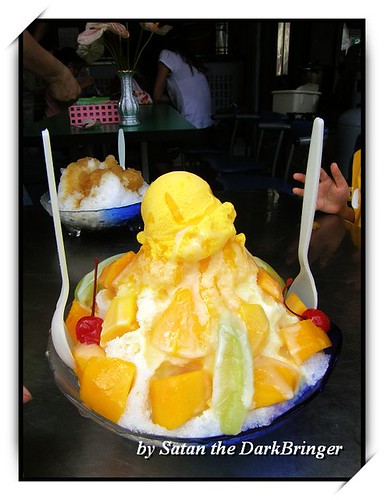
The other day I was talking to Yi-Chung (益誠) after the training while digging into a huge pile of Taiwanese shaved-ice with fresh fruits on top (hm...), and we spoke of something which was quite interesting. Namely, when you visit another dojo from the one you train at everyday, you tend to be more concentrated, more alert, and more ambitious in giving your all. This alertness or "amibtion" usually makes one perform better than usual. This is why, from time to time, it is good to visit another dojo and refresh the mind.

But why can't we retain the same amount of alertness and be ambitous EVERYTIME when we train?

We should... but it's difficult indeed...

Saturday, March 28, 2009

Bad habits in jigeiko


Yesterday evening 7 people turned up for the training, and I led the session. As always an extensive package of kihon-geiko was on offer. After about 300+ suburi swings, we did 4 x kirikaeshi, 2 x do-kirikaeshi, and few rounds of big men and middle men strikes to practise the wrist snap. Then loads of kote-men and kote-men-men strikes. 

We also practised seme and men-strike starting from to-maai when the tips of shinais just touch each other. And by moving both feet inch by inch whiling maintaining a good kamae, the kakarite reaches the isso-ku-itto-no-maai at which point he strikes. Just before extending the arms to strike, the left foot is kept still while the right foot glides forwards. 

Some 15 minutes were left for jigeiko towards the end of the training, which is rather short. Next time hopefully I can control the time better so that we can do 25 minutes jigeiko.

One difficult thing for most people including both advanced kenshis or beginners is that, many bad habits show up in jigeiko: upper body leans forwards when striking, constantly moving backwards, blocking, jumping backwards/forwards or evening sideways (which is back footwork).

It seems that for most people, the motivation to win overcomes far more than to do good kendo in jigeiko. There is a very good article on the Attitude to Jigeiko by Sotaro Honda Sensei (click). There are plenty tricks that work when fighting against players of relative low grades (including me) but they are useless against higher grade kendoka. If we indulge ourselves into these temporary moments of victory, the road to obtaining a good kendo would only be made longer and more difficult. Because these habits will become harder and harder to correct, and after one has corrected them, he would realise that much time has been wasted. 

I constantly remind myself of this.

Sunday, March 08, 2009

More fighting spirit

In the past few months, I've focused more on the correctness of strikes, and it's been a while since I spoke of fighting spirit and the controlled aggression towards my opponent. I think it's about time that I bring more of that element into my kendo again.

It seems that the improvement in kendo is a perpetual process of proving ki (fighting spirit), ken (sword) and tai (body). The meaning of fighting spirit is self-explanatory. The sword is, for example, the sharpness of the strike. The body means, of course, good posture, brining the hip forwards and good footwork. 

Wednesday, February 18, 2009

Post-flu and back to Dresden

After a week of rest from a severe flu, I went to the training yesterday. My wrist snap is much stronger thanks to the suburi I've been doing. Footwork is however difficult to practise home, since I usually just kneel on the floor to swing the shinai in order that my ceiling doesn't get destroyed. I should continue my suburis.

It has also been a few months time since I joined the university's Tuesday training when the beginners practise. It's already towards the end of the semester and still a lot of beginners stayed on, which is very encouraging. I think this is undoubtedly due to Stephan's ability to make a training fun for them. It's not an easy task. How do you make kendo fun while teaching them solid foundations? Being too demanding takes away their fun. Being too easy going scarifies the rigor of good kendo. I don't know. 

Friday, December 05, 2008

Japan 2008 - 2: Kamae 構え

In the first few days, some conversations popped up between Hara Sensei, Ryuzo and me (on the listening side) about the importance of Kamae.

The literal meaning of Kamae says already a lot of things. The word Kama "構“ means structure. It is the foundation for all things. Needless to say that a good Kamae is what every one should achieve. But what is the importance of Kamae? What is a good Kamae? What is a bad Kamae? Moreoever, there is a mindset that prevents having a good Kamae. I'm going to summarise what was mentioned in the conversations in the following. 

First I will mention the story that Ryuzo kun told me. He started kendo at a very young age, 6/7 years old, training at the police dojo in Miyazaki. Of course, as almost all kendoka in Japan know that Miyazaki has very strong kendo, the training is tough and the style is orientated towards competition and winning.  Over the years, he developed very strong kendo and had always been in the school and university team to represent in the competitions. However, he said only from 3 years ago, when he changed his view about kendo, it has become more interesting, and he thinks it's what kendo should be. "Between 19 years to 28 years old," he said, "my kendo performance depends on how much I trained during that time, and my kendo level stayed roughly the same. There was not much playing with mind." His kendo at that time consisted of much blocking, and dodging. His kensen was also flying every where. However, influenced by Yoshimura Sensei, 8th Dan, from Paris, he started to understand kendo from a new perspective, one that grows with time after each practice instead of solely on physical condition.

"The first and the most important thing is Kamae." He said. "A good Kamae is the perfect defense, and is also the best preparation for an attack. One should learn first Kamae, then learn seme, and finally the use of Oji-waza."

During the conversation with Hara Sensei, Hara Sensei talked also about the importance of Kamae, and what kendo is. "A good attack must have a story," and he asked me, "why did Liu-san hit my kote?" I could not answer it. "If the Kamae is not broken before attacking, there is no story, and no communication." I will always remember this. He continued, "To become Hachidan, the story needs to be apparent to not just the two fighiting kendoka but also the audience."


From Japan 2008

[Hara Sensei and Ryuzo kun reflecting on the essence of kendo over some sake and food.]


Monday, August 11, 2008

Take life as it is

How come while the others are enjoying the summer vacation, I'm working until after dinner time? Last weeks I trained on average once a week due to parents' and friends' visits, plus more research papers that I'm writing - great for work, but on the expense on my hobby.

Life is not as simple as the student life before the graduate school, when everything I had to worry about was the present. Now I have to worry about the future and work for it. Is it distraction? Or maybe the opposite - my hobby is the distraction?

Neither, I say. I just take my life when it comes and how it comes.

* * *

Last Friday in the training I explored different types of footworks for seme. Sometimes my opponents got distracted while I move sideways, which became a good moment for attacking.

Sunday, June 08, 2008

New blog on Taoism and Kendo


I created a new blog to discuss the connection between Kendo and Taoism. Follow this link: KendoAndTao.blogspot.com.

Saturday, May 10, 2008

Don't leave the upper body behind

Only trained once a week in the past two weeks because the amount of stuff I needed to do at the moment. I'm happy that things outside the dojo are going in general quite well at the moment. This gives me a more positive feel when I come to the dojo as well. I remember last year during particularly stressful time, kendo was my meditation and my escape. Every time when I came to the dojo I felt like I was coming to take a massive dosage of paracetamol, and I took it willingly.

Stress brings good kendo. I think this was almost what Jindra told me last year as to why kendo in Japan is so beautiful. Because it is shaped by the stress in the society. Though it could be an exaggeration, there is however some sense in it. Apart from techniques, people search for the spirituality as well as the self-confidence in the dojo. These two elements naturally become the main emphasis in the adult kendo.

Yesterday's training was one of those in which I suddenly understand something. This time was to do with men-strike (how surprising..). I put my weight, especially my upper body, more towards the front at the instant of the striking. This make my strike faster and more explosive. Before I tried too much to bring my hip forward, and ha.. the result was that I brought only the hip. My upper body was behind. Of course, if the upper body is leaning too much forward, it's not good either. It's a very delicate tipping point. For me, I need to be more consistent. If I do it once, I need to do it the every next time. This is my goal.

Apart from the body, my left fist sometimes goes slightly over to the right of my centerline during men-strike. This is very bad, as my opponent can easily win during ai-men. 

On a completely different story, there have been over 10,000 visits to this blog! Thanks for continuing to come back. When I started writing this blog I never thought or worried if there'd be anyone viewing, as it's just like thinking out loud for me. It makes me happy that some people find it helpful, and over the past couple years I have got some nice emails from some of you. Thank you!

Saturday, April 12, 2008

Breaking the wall

So how has it been since I came back to Dresden almost a month ago? It's interesting to come back having understood more about kendo, and practise with everyone. Obviously, Dresden kendo being so young, is it impossible to compare with the standards of some of the other dojos where there are many 6th Dan, 7th Dan or even 8th Dan kendoka. But I think we're doing amazingly well here. It only takes time. 

The most important thing is that we should never forget to be open-minded and take other people's advices. There is a Chinese idiom - "a frog at the bottom of a well (井底之蛙 [Jing-Di-Ju-Wa])". A frog at the bottom of a well only sees a small patch of the sky. It describes someone who lives in a small world and only sees what's going on within, not knowing what he or she sees is only a tip of an iceberg. 


A new delightful addition to Dresden kendo is Stephan Otto from Berlin Kokugikan. A nice guy with good kendo forms with whom I've enjoyed practising so far.

There are some main thoughts from the trainings in the past few times:

  • Interestingly when seme is good, it does not matter if one strikes small or big men. No wonder Senseis always make large cuts and still win against the younger kenshi who use small cuts.
  • Stephan pointed out that if I miss the target my upper body tend to lean forwards. I think there's something wrong with my balance during the strike, perhaps my hip wasn't following quickly enough. Have to correct...

Thursday, April 10, 2008

Shodan exam questions

I put here the answers to the written exams I had to do for the Shodan test. Discussions welcomed.


1. What do you understand by the term ki-ken-tai-itchi?


In the context of kendo, ki means the fighting spirit, a necessary element to overcoming one's opponent. It is most easily demonstrated by Kiai, or the shouting, to convey one's will to fight. Ken is the sword, a successful strike requires, of course, the targets to be struck accurately with the top one-third of the shinai, and the contact has to be strong and sharp. Tai is the body, without bringing the body forward with the strike, one looses his own posture and is prone to counter-techniques and from the aesthetic point of view, it is also unacceptable. The correct way of bringing the body forward is to put one's center of gravity at the lower abdomen, and keep the upper body up-right during the strike, using the left leg to propel the hip forwards. The fumigomi-ashi, which is the stomping of the right foot, should accompany the strike.


A valid strike in kendo requires these three elements together, and hence the phrase ki-ken-tai-itchi, literally meaning the unification of these three elements. This means that the striker has to make strong Kiai at the same time of an accurate strike while bringing his body forwards, with the correct posture mentioned above. These three elements together demonstrates one's skill, body balance and fluency, and further more, the commitment to a strike, which are fundamental in kendo.


2. Describe your relationship to your Sempai


In the dojo, Sempais are like the second teachers to me. They accumulated the experience of kendo over the years from various Senseis, and through practising with them, I learn these essential skills from them. I tend to pick someone in the dojo who has a much superior skill and a personality that I aspire to, and imitate his movements and postures. The personality side is equally important, in my opinion, because I do believe that one's kendo is closely connected to his personality. Therefore, it is important to learn a style of kendo that suits my personality. 


I am always grateful for the constructive feedbacks given by my Sempais after the training. Then in the next training, I usually go to the same Sempai and practise with him, at the same time, making sure that I try my best to correct my previous mistakes. 


Thursday, March 20, 2008

Japanese delegation's visit to Dresden


Yesterday the Japanese Senseis from the Czech seminar came to Dresden for a one-day visit. Stephan and I took them first to the Swiss Saxony and then the historical part of Dresden for sight-seeing. It turned out better than I expected, and I think all of them enjoyed the tour.

In the evening we had 1.5 hours of practice. Ninomiya Sensei lead the training, in the Kobukan way. Jindra and I demonstrated the practice. It was a good turn-out from the Dresden club, joined by friends from Leipzig.

While practising kihon, Yamanaka Sensei pointed out that many people, when striking sayu-men and dou, are not gripping the shinai with the left hand correctly. They should not be let loose but kept tight, so that the strikes are solid.


I asked Ozawa Sensei earlier during the day how he thought about my men-uchi. He said I should tuck my chin in, and we would practise again in the evening. So after the kihon and waza-geiko, I queued up for him. I made a couple of solid men-strikes, and he smiled and said, "men-uchi, ok, ok". When we finished, he told me I have improved. He has a distinctive way of expressing it. He says, "up, up."

He said a few times that I should go again to Kobukan, so that my kendo can improve consistently. I hope this year I manage to do it again with the working schedule.

Just before we started jigeiko. We sat in seiza and watched Yamanaka-Sensei practising with Hara-Sensei. They started already while we were doing waza-geiko, so in total they probably continuously fought for 15 minutes. In the end Hara-Sensei was completely exhausted while Yamanaka-Sensei was still making continuous strikes, but he still kept going.

My second jigeiko was with Yamanaka Sensei. The time was just up and everyone else started kakari-keiko. However, he directed me to the side, and had about 3 minutes jigeiko with me. Of course, I was not able to do anything against him, but I just tried to do good strikes.

In closing, Yamanaka Sensei made a speech to us. He said that Kihon is the most important element of kendo, having a good posture and be able to do big cuts are fundamental for good kendo. "One - kote, two - men. If they are ok, then do kote-men and kote-dou. Progress step by step." "During one's kendo development, if one meets a wall that he can not pass, he must go back to the basics and start again."  I was truly grateful for his words which contained a lot of wisdom. This is how I feel in learning many things, not just kendo. He then said that he saw everyone's hard effort and hoped that one day we can practise again.

We farewelled with the Senseis with lots of hand shakes and picture-taking. After this meeting, and the Czech seminar, I felt I have a even tighter bond with Sensei, and kendo. I feel I get a lot of pleasure meeting new people that are from completely different backgrounds and cultures. More and more I realised that people are as important as the sword in kendo. Without partners to train, we would not improve. People who are generous and understanding are better training partners than those who just care about defeating the opponent. This is how kendo cultivates one's personality, and educates how one can overcome competition and pressure with a big heart and a gracious attitude.


Thursday, November 22, 2007

Shyugyo 9 - final thoughts


It's been a week since I left Tokyo. The time in Tokyo seems much too short, and the past week too long. I miss the people and the kendo at Kobukan, not to mention the great food and dynamics of the city. I think I quite simply haven't left there.

I want to write a small summary of the kendo-related things I came to realised while I was there.

I arrived in Kobukan with a very open mind, not very sure about what I was going to see, and how I could learn. In the first two weeks I was practising with 7th Dan Senseis during the kihon exercise and did only basic cuts, such as men, kote-men, kote-dou, and kote-men-dou, etc. Everyday I got up in the morning to first wipe the dojo floor and 500 suburis. I learned all over again how to do suburi and men-strikes. While from the Senseis I received simple yet important advices on the basic cuts, other sempais tend to give more specific comments on jigeiko and techniques. Kudora-san showed me many wazas and the related foot works. He trained often with me alone to improve my men-strikes, and told me I should use more kote-men in jigeiko. Akita-san told me the importance of never stepping back during practices. He said, "it is safer if you step backwards, but you'll never imporve." This quite applicable to life in general, I find.

I now could appreciate the importance and beauty of kata, and am able to do it up to the 7th form. Though not perfect, I received many helpful guidances.

Many Seneis gave me very positive feedbacks on the style of my kendo. They are all surprised that I have done kendo for no more than two years. Nonetheless, I am still a beginner to them.

So what should I do from now on?

Ozawa-sensei once told me I should do big men-cuts for 5 more years, and suburis everyday. Kuroda-san's effort on improving my men-strikes was very helpful. I couldn't yet strike a good enough men before I left, but I know what I should do, and I will continuously work on it until the next time we meet.

As Mr. Chow described, the kendo of Kobukan is one that never steps back. I will continue this spirit. Honda-Sensei encouraged me to continue what I was doing at Kobukan and continue the style of kendo I played.

Iinuma-san told me not to back down after striking kote. Kanji-Sensei told me when doing men cuts in kirikaeshi, I should put more kisei in.

The most important thing about kendo I learned was to be able to appreciate its true beauty. Before this, I had seen the videos of 8th Dan kendoka playing kendo, but never thought that this is the style I would like to try at this moment. However, from what I saw and was told by the Senseis, I realised that this is a goal that I can and should set for myself now.

What is beautiful kendo? In my humble opinion:
  • Good kamae, good posture during and after strikes.
  • Strong centre.
  • Always apply pressure (seme) forwards. Never step back or move side ways without the intention to strike.
  • No bending of head or body to avoid strikes.
  • No meaning less strikes.
  • Striking from issoku-itto-no-maai, instead of chikma (close distance), as Kuroda-san said.
So long my friends from Kobukan. I hope I will see you in the near future!

Friday, October 19, 2007

Confucius says

I'm on the train to Leipzig right at this moment, on my way to London. I'm really supposed to get some more sleep, but as soon as I close my eyes, thoughts start to come in my head. What thoughts? Thoughts on what kendo means to me, and how it has integrated in my life in the past two years.

Kendo is a reflection and manifestation of someone's own personality, and therefore experiences in life. Some people play aggressive kendo -- continuous attacks and plenty of taiatari -- some play calmer kendo -- move little, but strike sharply when the right moment comes. It is important to bring the daily experience in life to kendo, and the experience in kendo to life. Thus kendo is alive, instead of just a physical sport. It's perhaps why there is a minimum age for testing for the hachidan. One must mature as a person to qualify for the highest grade in kendo.

In my family and at school, as the majority of Taiwanese families, I was educated with Confucius. It's an attitude of treating the people around you and treating yourself. One must be strict with oneself but be tolerant with others. Be humble and self-critical. The true confidence is when one can admit his own weaknesses in front of all others. The truly intelligent people appear na\"{i}ve, as Confucius said: ``Da Chu Ruo Yu". One must let go of his own ego and be a student of everyone else. As Ozawa Sensei signed in my book: "All are my teachers but me".

In Europe, however, this education does not help one to elevate his status among the society. People need to know how to sell themselves. In Germany, this is even more important to show other people that you are strong, and people really do take it for granted as to what you say about yourself. Often when I criticise myself in front of a person as a sign of modesty, it is usually taken as a lack of self-confidence, and I see the person's face changing from an approving smile to an awkward and rigid expression, avoiding the eye-contact. People do believe what you show and say, which perhaps has something to do with Germans' directness. When I say the same thing to a Taiwanese, Chinese, Japanese or even Thai or Malaysian, the general reaction would be a violent head-shake with disbelief, followed by a few no-no's, ending with a demand to correct myself to say that I am good.

Fascinating isn't it? Hard to understand maybe? Impossible to do the same perhaps?

But this is part of kendo. I'm not saying everyone should also do it in the west, as this is not the culture here. After all, it doesn't work in the western society. But at least to understand it, and perhaps everyone can learn something.

Thursday, August 16, 2007

Zanshin 残心

What is Zanshin? What is the manifestation of Zanshin? The wikipedia says:
... the continued state of mental alertness and physical readiness to instantly attack or respond to an attack or counter attack by ones opponent.
The kanji's are 残心 (Zan-Shin). Zan (残) means residual or remaining; Shin (心) means heart or mind. So the literal translation would be something like the remaining mind. Of course, as we know, it is used in the world of martial arts, but in a general way, it is simply the state of mind after one has performed a task. In kendo, one teaches that Zanshin should be the alertness after a strike, accompanied by clear physical postures and movements to manifest this state of mind.

For me, however, I think there is an element of "declaring victory" for the attack just made. This goes to the aesthetic part of kendo. When I execute Zanshin, I want to show with my kiai and movement: "I wanted it, I went for it, and now I am claiming it!"

What is Zanshin for you?

Friday, July 06, 2007

At the core

My graduate study is approaching towards the end, and, in order to ensure that I work hard enough to finish it on time, training will be kept at maximum twice a week. If every training goes well, this would not be too bad, though I can probably more or less only try to make my existing techniques more proficient. Not a bad situation. As there are still plenty of space for improvement.

Yesterday, about 14 kenshis with armours turned up. The kendo population in Dresden has really been climbing steadily in the past 1.5 years. When I started around that time, only a handful of people with bogu would turn up at each training. Once a few more beginners advanced enough to wear the bogu, a few with bogu would drop out. So the population had always somewhat maintained at an equilibrium.

So why has it grown so much in the past year? Well, I attribute it to the fact that we now have a handful of kendo fanatics, regular practitioners, whose will to improve their kendo is so strong that it surpasses the desire to engage in other activities. This tight circle of people makes up the core on which the Dresden kendo community builds. As they make effort to improve themselves, the rest feels the passion radiated from them, and sees a reason to learn more and to train hard.

Who belongs to this core of kenshi? Well, you know who you are.

So back to the training itself. Because all of us had bogus, we could concentrate on waza. After 10 mins of warm up, we did 30 mins of kihon and debana-kote. Then 30 mins of jigeiko.

When doing jigeiko with beginners, I practiced debana-men and uchiotoshi-men. With more advanced players I used more renzoku-waza. I still find it hard to make my left foot follow up quickly enough, especially when I am tired. But how fast the follow-on strikes can be executed depends largely on if the left foot is close enough to the right one. Other notes are:
  • remember when executing sashi-men, the initial motion resembles tsuki to secure the centerline, and at the same to prevent debana-kote.
  • keep the center of weight lower so that it's easy to launch forward to attack. But still need to try to maintain the posture.
Stephan's feedback from jigeiko:
  • In seme and kamae, keep the right arm relaxed while the left fist stays in the centerline. Do not push the shinai too hard.
  • For debana-kote don't think about avoiding the attack before the strike. Otherwise the posture would be broken.

Wednesday, July 04, 2007

Stay humble

First before the training started I helped Tina to improve on her fumikomi by first running across the dojo with okuri-ashi a few times with shinai locked behind the back under the arms, and then with fumikomi. After she managed that, we repeated the same exercise with shinai in kamae or men-uchi. It seemed to have worked.

Some notes from the kihon practice:
  • Kote: bring hip forwards. Don't take the shinai off the centre. Left hand should stay in the centre.
  • Kote-men: the tenouchi at the men-strike not sharp enough.
I should really work on both of them if I want to keep on improving.

We also practiced kote-uchiotoshi-men. The movement is very similar to kote-men, except because the opponent is moving forwards, the kakarite should not go too far forwards. The most difficult thing is perhaps to judge when the kote comes.

Jigeiko: I need more variation of waza. Should keep my posture while doing renzoku-waza, and quickly draw my left foot towards the right.

I did a nice men-nuki-kote on Jan with the kote really popped. At the end we had an ippon-shyobu. I wanted to do nuki-kote again but he didn't launch the strike after a few steps forwards, at which point my backward movement was slowing down and I got too close to him.

Bang! My men was hit.

Jan refused to call it a point because he thought it was a bit short. While some referees might think so, I felt I already lost because his kisei was much stronger, and coming towards me like a wall or a mountain. His self-criticism and humbleness are also why I respect him, not just for the physical kendo. It is very difficult sometimes to stay humble for kendo being primarily a competitive sport. But whoever manages to be confident, strong, but at the same time humble will improve faster and do good kendo. It is a long journey ahead.