About this blog..

This is a blog that I started in April 2006, just after I first put on my bogu (kendo armour). It collects the advices given by more experienced kendo practitioners as well as those from my own experiences. Both technical and the mental aspects of kendo are written in the blog. I hope someone will find them useful or interesting at least!
Showing posts with label dojo visit. Show all posts

Sunday, June 13, 2010

First time at the Taipei Japanese School

On Friday we had a looong training from 8pm-10:30pm, because Ho Sensei wasn't there and So Sempai led the training. The extra time was due to additional program following the jigeiko, which included the kakarite executing kote-men-hiki-men/kote/do followed immediately by men-debana-kote.

  • In order to have enough time to hit the debana-kote, one needs a solid taiatari, which makes the motodachi pause.

At the end I was really exhausted, trying to keep on going. The movement however became more and more proper - always happens.

Saturday morning at the Taipei Japanese School

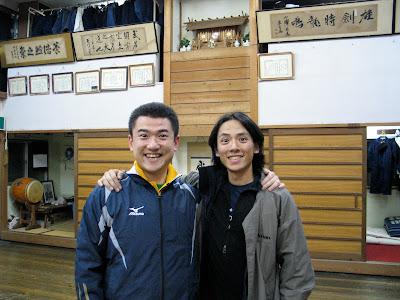
The lack of sleep didn't prevent me from getting to the Taipei Japanese School (TJS) at 7:30 in the morning. There Kimura-Sensei (now 7th Dan, a former student of Ozawa Sensei) was expecting me.


2007 Autumn - my first time in Tokyo. Ozawa Sensei, Kimura Sensei and me.

When I got there the children were practising kihon without the bogu. Three 7th Dan Japanese teachers and a few other adult ones were instructing them. It was interesting to see how they explained the basics, and of course I got to practise my Japanese listening skills! For almost every item, men-uchi and hiki-men etc, the children had to use the sliding footwork all the way across the hall after the strike. This really trains their leg muscles and fluency to the movements.

Afterwards we put on the bogu and became motodachis to the children. It was a new experience for me to have so many kids coming to practise with me, and to teach them. At the end it was mawari-geiko for the adults.

I got a few insightful advices from Kimura Sensei:

  • Try to communicate with the opponent with kensen from to-maai.
  • When doing seme, no matter how tall you or your opponent are, direct your movement downwards and not upwards.

The second advice I had never head before. However, it solves some of the questions I had in mind. So it was really a unexpected reward of this visit, as well as making a couple of new Japanese friends who are teachers at the school! I think I'll be back there soon!

Tuesday, September 15, 2009

First training in Tsing-Hua University

Yesterday I practised at the Tsing-Hua University for the first time. The main reasons to go there are that I need to practise 3 times a week, and that the students from this university whom I've met in the dojoes are passionate about improving their kendo. Therefore, even though they're not stronger than me, training with them would be a pleasure because a person with a good attitude makes a good training partner.

It was indeed a good idea to go there, and I did manage to train myself. Some of them are quite good given that they're beginners. However, the common problem is that they're way too silent when doing kendo. Kiai is not enough, which is in fact one of the most important things in Kendo, and the first thing one has to learn to do well. It seems that this is not emphasized enough in many places I've visited.

Nonetheless, their potential is great given there are several sempais in the club who are passionate about kendo. With the right instruction, they can become strong quickly, at least I mean winning in competitions. Dresden is exactly one of the examples..

Anyhow, I'm glad to find a bunch of hot-blooded young guns to train with!

Thursday, April 30, 2009

Training in Newcastle

Last Sunday I trained at the Ojika kendo club based in Newcastle. Thanks to Silke from our Dresden dojo, who was there for a year and contacted them before my visit, I didn't feel as much as a stranger. It was lead by Graeme Dockwray, 5th Dan, and a good 1.5-hrs solid training. My body condition was better than it was in Nottingham. Nonetheless, I was totally "knackered" after the training. Why? Because of the surprise birthday kakarigeiko. How did they know? dear friend Stephan in Dresden had asked Silke to inform them, making sure I "had fun", even though I left Dresden one day before my birthday. When Graeme asked me to step forwards before everyone, I was completely unaware of the devilish plot, until he showed me an email print-out asking me how to pronounce the name of a person did I see "Stephan...". Then I thought, "ok.. I'm in trouble..".

There were (at least) 4x kirikaeshi, 20 x men and 4x kakarigeiko. Towards the end of it I just went numb. Pain and tiredness put behind, struck on.

A couple pints of beer in the pub always helped. Which was where we headed right after the training. Very nice people. I hope I'll be back some time!

Advice from Graeme:
  • when doing tsuki, aim at the eyes of the opponent, and then at some point lower the kensen to strike the tsuki tare.


Newcastle April 2009

Tuesday, April 28, 2009

Training in Ollerton, Nottinghamshire, UK

Close to the Sherwood Forest (where Robin Hood resided, as the legend goes) is the small town of Ollerton. Last weekend I visited the dojo Kashi-no-Ki Kenyu Kai headed by Trevor Chapman Sensei (5th Dan), a very nice man whom I met 2 years ago in Tokyo, and finally I had the chance this time to visit him there.

I arrived in Newcastle where my father lives on Friday. On Saturday evening I stayed over at Ken Pepper's country house, whose son works in Sunderland. He is a member of KnK Kenyu Kai, and happened to be on a visit there which is much closer to Newcastle. So he very kindly allowed me to hop onto his car and drove me down to his lovely house.


Ken is a very interesting and kind man. He has a falconry, and has been breeding and training falcons for over 20 years. What a fascinating hobby! His son David is a former member of British kickboxing squad, and had won many titles, hoping one day to start kendo. I hope he succeeds on that.


In the evening, I learned that Trevor had told everyone about my visit, and asked everyone to show up. "Oops." I thought, and started to drink a lot of water in order to prevent dehydration from practising with zeal kendokas who want to squeeze every bit out of the poor visitor (rightly so!).

The training on the next day started at 10 am. About 15 people turned up for training. We spent the first half-an-hour on kata, which was good for me, since I haven't had enough practice and Trevor has a very good knowledge on kata.

The practice with bogu started as usual with a few rounds of kirikaeshi. There was a lot of kihon practice, all with large cuts. Even so, I could never had enough of kihon practice. But it had to stop at some point because, it's time for jigeiko! 

I first fought with Robert Wix, who visited Dresden last year, though I didn't have the chance to practise with him last time. My second partner was a young chap, who had lots of energy. So I got a good work out, and tried also to use more oji-wazas. Then I practised with Trevor, which was the first time because in Tokyo we didn't have the opportunity to do so. Since I knew very well his philosophy of kendo is not far away from mine and that of members from Kobukan, after standing up from sonkyo I started to work my way to fight for the centre. I succeeded in landing a couple of good straight men cuts, while also receiving a few good whacks on my head. A clear difference between Trevor and the other members of the dojo is that, I felt already a lot of pressure after bowing and during sonkyo. I see this as a sign of respect for the opponent, that he is being taken seriously. This also engaged me even more for the fighting that was to follow.

I had two more jigeikoes, one with Ken and the other with a younger member Akagi san. Ken's body condition didn't allow him to move his lower body fast, so he concentrated more on reacting to my movement. My job became trying to make him respond first and then respond in return, i.e. putting pressure by faking men or kote strikes and then strike.

After the keiko, Trevor took me to a Chinese restaurant and had much pleasant chat about kendo experiences as well as other things. 

Many thanks to Trevor, Ken and the members of Kashi-no-Ki Kenyu Kai. I hope we will meet again soon and practise kendo. I'm very curious and expecting a good kendo development in everyone here.


Two feedbacks from Trevor:
  • For the zanshin of Hiki-men the shinai should be about 45 degrees and the tip should not point too low. This is of course for a fast strike from jodan if the opponent chases up.
  • My left foot is sometime too far behind from the right in kamae. 


Monday, April 07, 2008

I am Shodan

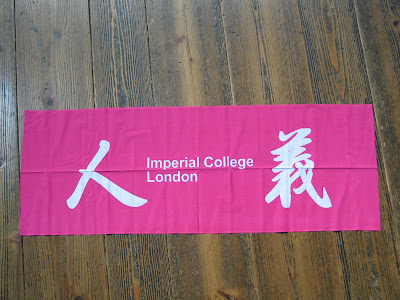
On Friday I took a BA flight to London for the grading on Sunday. As in Autumn last year when I took my Ikkyu test, I practised with the Imperial College Kendo Club on Friday evening. Luckily this time, Matsumoto-Sensei (7th Dan Kyoshi, British National team coach), Yung-Sensei (6th Dan Renshi), and Yoshikawa-Sensei (5th Dan), plus the members of the Mumeishi club. It was a hard training, where at the end I could hardly breathe.

Some exercises like keeping the distance with a partner in Kamae while moving in four directions were nice to check the body balance in Kamae.

Yung-Sensei pointed out that my sayu-men in kirikaeshi is not strong enough. Need to improve..

This time when doing jigeiko with Yung-Sensei I could get a couple of points. So I think my kendo has improved a lot since last Autumn. There was a female member from the Mumeishi club with name Gill, who is really good and fast. I couldn't quite keep up with her at times.


On Sunday - first thing when I woke up - snow, and it was bloody freezing. I spent a while trying to get to the examination venue, Kodokan.  The sports hall is very modern and very well equipped. It must be nice practising there every time.

I met Trevor Chapman Sensei (5th Dan) again, whom I first met in Kobukan in Tokyo. It was a very good feeling to see him, who is a very good person. He was the on the judging panel for Ikkyu test.

I passed the exam without much trouble, though I was a bit nervous at the beginning while doing kirikaeshi, which I felt was not smooth enough. In the two jigeikos that I performed, I got many points, but I think too often I turned around to face the opponent immediately after the strike and jump backwards. It looks much nicer to run straight through first and then turn in an exam.

We did the first three forms of Kata, and I felt I did the best I could, which I was pleased about. 

But in fact, I think anyone who could wake up to this freezing weather and goes to the examination should be given the grade straight away :)

I also watched the exams for the 2nd and the 3rd Dan. Many of them do superb kirikaeshi compared to mine, I should really improve on that. Specifically, some of them have very nice snapping sound from the sayu-men strikes. In the 2nd Dan jigeiko, I saw them taking more time to seme, and some used wazas, though mostly unsuccessfully. For the 3rd Dan, people in general have very good kamaes, and really tried to open up striking opportunities.

My current goal is: applications of waza in jigeiko. 

Tuesday, March 11, 2008

Back at training

Last night I resumed my training after almost two months of absence due to injury. I practised again with the Quebecans here in Quebec City. It was good to see the friends here again, and as the last time, I had a good training.

My task last night was to let my body get used to the kendo movement and intensity. There wasn't anything that I haven't tried before. I was just trying to pickup my kendo two months ago.

Despite wearing the foot support on my injured foot, it still felt sore even this morning. During the training I almost had cramps on my lower legs, but fortunately it wasn't too bad.

I'm going back to Germany in a few days. My next training will be at the seminar in Czech Republic this weekend from Friday, held by Ozawa Sensei. I'm very looking forward to see him and the other accompanying Senseis whom I had met in Tokyo. After the seminar, they will come to visit in Dresden. This will perhaps be the highest profile kendo visit ever in Dresden!

Saturday, December 08, 2007

First practice in Paris

Yes... I feel so good having practised this morning at the dojo Budo XI, after a stressful day yesterday. Yesterday morning I unfortunately miss my 6 am flight, for which I had to get up at
4 am, but my reflex (in kendo, we'd say the debana-waza) was to grab the clock and shut it off. Only two hours later when it dropped from my hand to the floor did I wake up, like waking up to a nightmare. Finally I had to book another flight from Berlin and a train ticket to Berlin, which cost me almost 200 Euros in total. Bloody hell!! Anyway, so much so for the whining.

Today's training was for everyone. Perhaps due to the Saturday, many people (about 40+) turned up. So queuing took a long time. But I managed to do a jigeiko with Jean-Pierre Labru 6th Dan, who was the instructor today and a former European Champion. At the start he quickly scored two men-strikes. I was not concentrated enough. Then it got better afterwards when I tried to have stronger centre. The best moment for me was when I struck a straight-men cut with very simple forward seme. I crept my right foot forwards like Kuroda-san taught me, and struck. The strike landed perfectly in the centre and my left hand was in control. All of which happened when Labru Sensei was still in kamae. He nodded in acknowledgment of the strike. The motion felt so smooth that I thought, "This is it. This is kendo."

I think as in many good institutions, how the reputation is does not guarantee the success of its members. It still takes a lot of hard work if one wants to compete with the top players from the other dojos. However, a place like this dojo where there are a 8th Dan Sensei and many high grade kendoka means that, one gets very useful advices from time to time. So there is always something to work on, which is fundamental and important. But without the hard work, the advices remain as only theories.

Monday, December 03, 2007

Across the Atlantic 3

On Friday I had the last training with the Quebecoise. As usual, the Friday's trainings are for yudansha only. About 10 people turned up, which was not a lot, but enough to have a good session. The advices I received were:
  • Taiatari correctly with the hip. The hands should be below the chest.
  • Strike sho-men and sayu-men with the kensen swung farther, making clear snapping sound.
  • Shaper on the kote strikes.
Towards the end of the session we had shiai-geiko (1-min Ippon shobu), part of the special farewell treatment for me. I won 2 matches, lost 4 and drew 1. I was not careful in the matches I lost, which ended all in men-cuts. They were, however, really good cuts. I won one of my matches with kote, and the other with kote-men.

The three trainings I had here were very enjoyable and, at the same time, helpful, because practising with different people always gives one something new to learn. Their style (more mature compared to the "student kendo") also enables me to work on my seme. For me, 3 times were too little. I wish I could stay here for longer. But for sure I will come back. So until then, ou revoir!

Tuesday, November 27, 2007

Across the Atlantic 2


The training just got better and better. Yesterday more people turned up for training. We did a couple of interesting exercises apart from men- and kote-men-uchi. First of them was kote-taiatari-men-taiatari-kote-taiatari, and we executed it across the dojo from one end to the other. I really found that my taiatari was too weak, which was something I didn't train at all when I was in Tokyo. Back in Dresden, everyone else's taiatari improved a lot as well. Improving my taiatari might help bringing my hip forwards when doing strikes. The second exercise was kote-men-dou. Following from the previous exercise helps to keep the upper body straight during the continuous strikes. So it made complete sense to put the two exercises together. Kimura Sensei came to tell me that I should make my kiai louder.

After the kihon exercises we did a few rounds of jigeiko with rotations (mawari), before the free-jigeiko. I again went flat out fighting with Kimura Sensei and Awaga Sensei. At one point I was frustrated that his kensen was against my chest when I struck his men, despite that I waded his shinai off centre. So I continuously made the same strikes, but none of them succeeded, which made me even more frustrated!! He told me that very often I was too close, and at this distance his kensen is already in the middle. Our jigeiko finished with me doing kakarigeiko, and I made sure I gave the loudest possible kiai for my last strike.

There are many people here who have strong centres, and I think it is a good opportunity to explore different footworks during seme. I also want to make sure I strike kote in the way that, if it fails, I can immediate strike men. [Edit: Georg wrote in the comment a list of one can do when kote-strike fails, see below.]

Saturday, November 24, 2007

Across the Atlantic

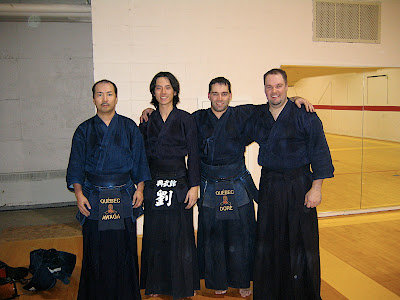
Last night I practised with the Quebec Kendo Kai, based at the Laval University. Luckily, Shigeo Kimura Sensei (7th Dan) from Toronto visited QC and lead the training. It was one of the most exhausting practice I've had in a while. I had long jigeiko with Martin Dore (5th Dan), Hiroshi Awaga (5th Dan) and Kimura Sensei. With Awaga sensei I really couldn't do much, because he could almost predict my moves and had a very strong centre. When I was completely exhausted, he announced, "Ippon." Oh, my goodness me. But that was when the real training began. My fourth and last jigeiko was with a less senior member, with whom I had more successes.

Afterwards we went for a beer and some snacks in a nice cosy pub. Kimura Sensei said to me if I cannot make the training I should do suburi at home, so that my body remembers the movements, which will help the next training and make it more efficient. He said ideally one should train 4-5 times (!!)

The coldness in Quebec is just beyond words. It was -15 degrees last night, and it's just the beginning of the winter! The bunch here are very friendly and fun. They told me that they don't have visitors often, and I guess they are very curious about me!

Thursday, November 15, 2007

Shyugyo 8 - last training


In the last few kendo trainings, Kuroda-san has been very nice to practise with me alone on basics. Men-strikes in particular. It probably looks a little strange to the others that we are doing such basic cuts while the others were doing jigeiko. But neither of us cared. I'm really grateful for his effort, and I'm somehow flattered as well. After my last training, which was yesterday, he took his charm inside of his dou, and gave it to me. I couldn't be more touched.

In my last training on Wednesday evening, many people turned up, and the dojo was very full. About 10 7th Dan Senseis turned up, so it was an eye-candy to see them doing jigeiko with each other. I first had a "goodbye" jigeiko with Ozawa-sensei, which was of course very exhausting and more like a kakarigeiko. I didn't manage have jigeiko with anyone else apart from training with Kuroda san because the huge number of people and limited space. During the final kakarigeiko Kodama-san "thoughtfully" pushed me to Ozawa-sensei for the final kakarigeiko, something that I am so glad to have done. During the cool-down exercise Ozawa-sensei asked me to give a short speech in Japanese after meditation. I was "a little" unprepared, but as I know pretty well what I would like to say to all the people. So I used very limited vocabulary to say,

``Tomorrow I am returning to Germany. Three weeks of kendo practice in Kobukan. Kobukan's kendo and nin-jou-mi (人情味) (hospitality) I like very much. In these three weeks, I made many many friends. Thank you all very much.''


I thanked all the senseis whom I have practised with. Kaji-sensei wished me the best and keep training hard. Honda-sensei, who surprised me with very elegant English, told me that he likes my kendo and that I should continue this style of kendo when I go back to Germany.

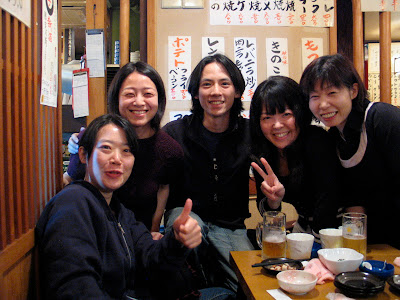
After the training we sat in the dojo and had some beer before moving to another Izakaya for more drinking with three other senseis including Hashimoto-sensei. Iinuma-san, and Kodama-san were there too. I had many many fun and enjoyable conversations with them.


Friday, November 09, 2007

Shyugyo 7 - one goal


I'm rather sad that I've got only less than one week left to be here. Not only the kendo but many nice people I have met, and the city. There will be four more trainings, from Sunday to Wednesday before I leave on Thursday.

Tonight's training put me right back to the basics. I fought with Ozawa-sensei, Kuroda-san, and Kodama-san (a mint female 5th Dan). My men-uchi is too weak, so I always loose on debana-men. Kuroda-san told me that I shouldn't use my wrist too much but my shoulders to lift the shinai, and simply extend my wrist outwards. Kodama-san told me to push my body, and strike with my body. I will be happy if I manage to improve this in one year, since this is so important.

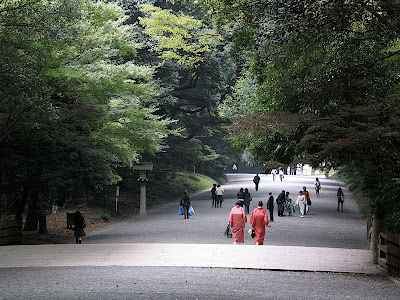
I went to the Meiji-shinku today and took some pictures. At the kyudojo there I saw some kyudo in action, which I think was an examination taking place.


Wednesday, November 07, 2007

Shyugyo 6 - weekend away and counting down


Just before and after the training on last Friday, Kuroda-san taught me many fundamentals of different techniques. I memorised the theory in my mind, but it will take a much longer time to be able to do them and refine them. Right now I would be very happy if I can strike a perfect men-cut with a good fumigomi-ashi.

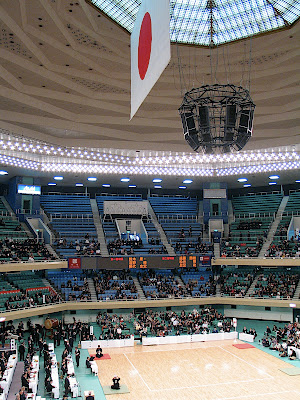
On Saturday we went to the 55th All Japan Kendo Championship (with Kuroda and Leena). I was very excited to be in the Nippon Budokan, because watching the past championships on videos made it a very special place. I felt like a pilgrim finally reaching my final destination.

I found it a pity that the last year's winner Nichimura lost in the quarter final. His opponent struck a men-cut in the first 10 second or so and made a point, after which he was just defending and even got a hanzoku for wasting time. Nichimura lost with 1-0.

Another interesting event was the appearance of a Nitto kendoka Yamame(?). It's perhaps the frist time ever that Nitto has appeared in the AJKC. He went to the second round, but lost there.

Over the weekend I was in Nikko with my family, enjoying the rare occasion of our family reunion in a place with beautiful scenery, good food, and hot spring bath.


On Monday I managed to arrive in the dojo early enough for the training. I remembered a sensei told me last week to execute the men-cut in kirikaeshi with more kisei and bigger swing, so this time I did it better. My do-kirikaeshi has become more fluent.

In jigeiko I fought with Hayami, Nakajima, and Akida. Akida told me that I should move forwards more. It might be safe to step backwards to defend, he said, but one will never improve.

This morning I resumed cleaning the dojo floor and the 500 suburi after being away for a few days. I felt my legs are stronger and it's now much faster to clean the whole floor. Hope it'll be a good training tonight.


Some videos of musicians on the streets in Shinjuku:


Friday, November 02, 2007

Shyugyo 5 - beauty of the kata


Kata and form is an emphasis of Kobukan. Every Thursday evening is the kata practice. The younger members work on Nihon kendo kata, and the more senior members who have mastered it to a certain degree work on Itto-ryu Mizoguchi-ha kenjutsu. The Mizoguchi school was brought to Kobukan by the late Ando Konzo sensei (8th Dan Hanshi). He looked at all the schools of kenjutsu of Japan and preferred this particular school. He went to the soke (the head of school) and learned directly from him in only one week. At the end of the week, seeing that Ando-Sensei had mastered the technique, the soke gave him the permission to teach the kata elsewhere. This is the origin of Mizoguchi-ha kenjutsu in Kobukan.

Yesterday I practised the first three forms of kendo kata with a sensei. He told me many fine points of kata - how to show the kisei. This completely opened my eyes. I used to think that kata is just like a sequence of movements that catalogs the techniques of kendo. So it wouldn't matter if you learned it while in bogu or not. For most people, it is just a formality to past the exams. But I realised that there are much more to the kata. Every little movement counts. It is amazing to see that even 7th Dan sensei's are still trying to refine their techniques.

I learned the 4th Kata from Hayami (4th Dan, currently Australian team member). I remembered all the sequence, but I need to practise it many more times with different people to get the details correct.

One mistake I tend to make is not cutting farther enough. I halt my bokken too early.

After the training, we went to a restaurant nearby specialised in Okonomiyaki. Here is a video!


Thursday, November 01, 2007

Shyugyo 4 - friends and teachers

Yesterday was the end of my first week here. I feel that I had only been on a beginner's course, and now gradually I'm starting to receive more specific advices. In the afternoon I went to the Nippon Sport Science University (or Nittaidai) which trains the sportsman of the highest calibre in the country and the world. Sensei teaches once a week kendo here, and he invited me to come along. The session is short. Only about 1 hour - 30mins exercises and 30 mins jigeiko. They started with kirikeishi, followed by men-uchi, kote-taiatari-kote-taiatari-kote-taiatari, and ai-kakarigeiko. I had a jigeiko with a sempai of the class, and Hakamada sensei (7th Dan).

Advices from the class members and sensei:
  • Take large steps for taiatari.
  • Sharper cuts for kirikeishi.
  • Put more pressure forwards and don't retreat once during attack.
A couple of hours afterwards the training in Kobukan started. During the kihon Ozawa-sensei was watching me. He told me to cut do sharper. I did as told and from my peripheral eye-sight I saw him nodding his head. I think he is emphasizing that now I should work on speed and sharpness.

I had only the time yesterday evening to have a jigeiko with Ozawa-sensei. I was happy enough with my performance. I wasn't caring that much about winning but holding my centre and my posture. I tried to go through every time when I struck men regardless of if my kote was hit (which happened a few times yesterday). I think sensei thinks jigeiko for me is not important at this stage, instead I should concentrate on Kihon. So, my jigeiko was a combination of sparring and uchi-komigeiko. Afterall, I never expected I can win a 7th Dan at the stage of kendo I am in. Perhaps I hit target, but so what? The beauty of kendo is what counts. In the past week, I have learned that the kendo style many people consider amazing and powerful in Europe are considered as kids' kendo in Japan. The past week has been overwhelming for me just to look at the people in Kobukan training and having matches with each other. There is a goal which everyone is working towards, but in their own different ways. Sometimes even how they hit is different. Some people use more shoulders and less wrist, and some people do the opposite. Sensei told me one should always do big cuts in kihon for ten years, and then he can start to think about doing small cuts. For me, he said, 5 more years.

After the training I went for a drink and some food with Kuroda-san. It was a very pleasant chat with him, and I am very happy to see him and Yasuko again in Japan. He was watching my match with sensei this evening and gave me some very valuable advices.
  • The chance for debana-kote or men is when the opponent moves his left foot forwards. So one should be careful about this, and also try to identify the chance.
He told me that I have centre and, in his opinion, only 5% of people have the centre. So that is very encouraging despite I have only done kendo in such short time. I told him the story about how I wanted to do kendo when I was little but couldn't because of the difficult education system in Taiwan, until I was old enough to decide what I wanted to do, plus a few years of hesitation. We exchange many interesting kendo-related and non-related ideas. I have a feeling that he will become a great kendo teacher one day.


I said to him that in five years we will have a shobu. :)

Tuesday, October 30, 2007

Shyugyo 3

Yesterday evening I had a very good training, in which I had jigeikos with Kuroda-san (first time seeing him in Tokyo), Ozawa's son, Gibbo (the British Champion), and Yasuko. Kuroda plays very beautiful kendo, not the competitive type, but the type that everyone in Japan considers as beautiful and as the ultimate goal. This is mainly due to having a very good posture. Ozawa-san has blitzing fast attacks. His kote-men fumikomis are virtually indistinguishable from each other. He could use keishi-men to avoid the shinai which I put in the centre line, and struck
my men beautifully. Yasuko was also difficult to fight though I could defend better then when I was fighting with the others. Gibbo does a more active kendo. He doesn't put as much pressure as the other people I have fought with in this dojo, but he sees the openings and seizes the moment.

I had many valuable advices from them, especially form Kuroda-san who corrected many fundamental mistakes I make on men-uchi.

The advice from Kuroda:
  • Use more kote-men in jigeiko
About my men-uchi:
  • Don't use fumikomi. Just let the gravity to do the job. If take a larger and faster step then it sounds naturally louder.
  • My hip was not even while striking. The left side is lagging behind.
  • My right wrist is turing the wrong way while doing the tenouchi. The inner side of the wrist should not be facing downwards.
  • The left-right weight ratios of the feet, and hand grip are 7-3.
From Yasuko:
  • My kote timing is good but it's a shame that I tend to go backwards.
From Gibbo:
  • I ran into his kensen many times. I should try to take the centre. ``The solutions are there, and you just have to find it''.

This training really made the whole week worthwhile. I'm starting to find mistakes I make and things that I have to improve on. It's one of the main purposes of being here.

Saturday, October 27, 2007

Shyugyo 2


I've only been in Tokyo 3 days but the experience has been exhilarating. Both in terms of kendo and generally speaking. I've made already many friends here, whom I go out to have some food and drink after trainings. The people have been extremely friendly and kind to me, and I get the comments very often, saying that I look like a movie star?! Maybe I should change a career and move to Japan instead.

Today there was a jigeiko session for the Rikadai (Tokyo University of Science) alumni at Kobukan where Yamanaka sensei (8th Dan) was present, who won the All Japan 8th Dan Championship 3 years ago.

The greatest difference in kendo I found between here and back in Dresden is that, in jigeiko, people have very strong centres. If one doesn't break the composure of the opponent, he simply runs into the kensen. Therefore techniques are very important. As for me, I need to improve on my basics: men and kote-men.

Ozawa-sensei gave me a new job: 500 suburi and clean the dojo floor every day. Gambarimasu!


Yamanaka sensei, ozawa sensei, and another sensei.


Yasuko and Suzuki san (right). Suzuki-san passed the 6th Dan test at the first time!!

Thursday, October 25, 2007

Shyugyo 1

Yesterdays training was a taster's session for me. There were about 40 kendoka, among which at least eight 7th Dan senseis. Because I didn't have bogu yet, I did only kihon, including uchigumi-keigo and kirikeishi. Ozawa sensei said my kendo has improved. To my delight, the other three 7th Dan senseis who were in my small group also gave me very nice comments, comments that are too good for me to accept. Perhaps because I was not wearing the bogu so they expected something much worse. It was exhilarating to see 7th Dan senseis doing jigeiko with each other.

Today I'm going to buy new a set of new bogu, and tomorrow will be my first session
in Bogu. I will give my best. Tonight is kenjutsu. My first session.

Wednesday, October 24, 2007

Shyugyo begins


Last night I dropped by the training session to return my bogu to Stephan. In the past fewdays, I was just so happy to be away from work for the weekend, but now thatI have returned and am leaving for a longer time, I started to miss the people here. In London, I felt strongly responsible for representing the Dresden kendo, and I recognise myself as having started kendo here. As I was explaining to them how our training is like, I realised that how proud I am for everyone here, praising their kendo.

Now I'm righting in the Milan Airport, where I have my flight transfer. To Tokyo from here is a 12 hour flight. It'll be 10 am when I arrive, but for my internal clock it will be 3 am. I hope I will be fit soon enough.

The second stop:
23th Oct - 15th Nov,

Kobukan,
Tokyo

Monday, October 22, 2007

Imperial College and Grading

I'm waiting for the Ryanair flight to Leipzig from London. This weekend was a very good one. One training on Friday evening with the Imperial College (my old university) kendo club, and another on Sunday after the exam, with the Mumeishi dojo members, not to mention that I
passed my Ikkyu grading.

The training with the Imperial College guys was very interesting. I was quite overwhelmed by how much etiquette is practised there, though I already expected much stricter code of conduct than we have in Dresden. I made two grave mistakes, one of which resulted in me lying on the floor. First was when I did jigeiko with Miyoshi-san, a senior in the dojo, I used tsuki. This switched his ballistic mode on, and he just showered me with strikes, at which point I actually though, ``Cool! Now comes the real goodies.'' But right after the match he talked towards me and told me, ``You're good. But you're a visitor, and I don't know you. You should not do tsuki against the senior in this dojo.'' I apologised afterwards a thousand times to him about it, and expect my gratitude for practising with me.

The second mistake was when doing jigeiko with Yung-sensei (6th Dan), 48 years old originally from Hong Kong, who still represent it in the World Kendo Championship. When I struck I very often ran into him. Like I'm used to, my zanshin in this situation was raising my arms high and springing backwards with a kiai strong enough to make an earthquake (well, ok.. it's an exaggeration). But it turned out that it can be disrespectful for the Sensei. Again, I switched on his ballistic mode, though this time not so fun any more. I tried to wade off his attack and counter-attack, but he's so fast that I could not do anything. At one point he feinted a men-strike, and I tried to block it while having my kote covered. He then struck three consecutive times harai-kote that put me in complete awe. At one point he pushed me very hard while I ran into him again with my arms over my head, and that just sent me to the ground. I felt I almost penetrated the ground to the floor beneath, and I really had to struggle to get up. What made it worse, he walked backwards shaking his head, which he did a few times. I was thinking at that point, oh dear, what have I done. But he explained to me later that I should go straight through and was very kind.

The exam on Sunday was rather easy for me as the Ikkyu grade in the UK is aimed for people having done kendo for between 6 months and a year. Having said that, I was shaky on the Kihon Kata because in Germany we've never done that, and the sequence of the steps are entirely intuitive. I even forgot to take the Dou off, and no one realised until the end of Ipponme. It was a hectic moment when everyone waited for me.

Not being so eager to know the results of the exam (because there's something that interests me more, and that's to meet the UK kendo community and see what the level and the atmosphere is like), I joined the free-jigiko session of the Mumeishi dojo, where Yung sensei lead the training again. I had very enjoyable matches with three senior kendoka (Ayers, Biscomb, and Foster), and one of them asked me, ``You do kendo like this and you are testing for Ikkyu today?'' I explained that I did almost two years of kendo, and just didn't have the time to come back and grade, he said, ``Nidan, nidan.''

My last jigeiko was with Yung sensei, before I got totally exhausted. We had a decent amount of time. I tried this time always to go through head-straight, and for the couple of times when I could not, I quickly put my arms down and did hiki-men. One time I got a kote with sufficient seme, which I am rather happy with. Some times I knew that sensei will do a men-keishi-do to counter my men, but I went for it anyways. Maybe just to play down myself to respect him? I don't know. Anyhow my centre was strong enough to prevent the strike from reaching my do in time. We ended the match with kote-men uchigomi-geiko. I just kept the thought in my mind, ``Just one more, just one more.'' And kept going until the end. Yung-sensei was very please with my performance.

The practice with Mr. Ayers was memorable too. He had just a strong debana-men technique that really REALLY frustrated me. For three consecutive times, when I went for men I was overpowered by him. How frustrating! It gives me something to think about.

This weekend I slept extremely well, and felt relaxed. In the two training sessions I felt fit again, ready to push myself like before, which is an encouragement for the forthcoming intensive 3.5 weeks of training.

I'm truly grateful for the guys at Imperial, Daniel and Tim, who really took care of me and made me feel home. I hope this is a starting point for new friendships.

Some thoughts from the weekend:
  • Review my kendo etiquette.
  • Larger stride when doing men.
  • Increase my wrist power.
  • Try to go through head-straight more in jigeiko.