 |
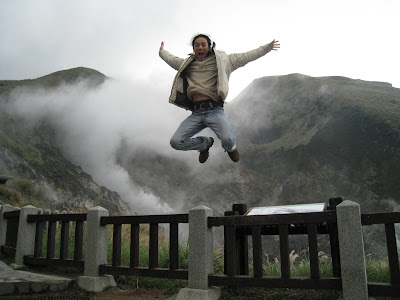
| Yang-Ming Mountain in Taipei |
The tradition of kendo in Taiwan was established during the Japanese occupation period (1895-1945). However, after the defeat of Japan in the war and the subsequent move of the Chinese regime to Taiwan, the anti-Japanese sentiment was strong. This caused a period of vacuum when very few Japanese Senseis were able to visit Taiwan to teach. Therefore, the Taiwanese kendo almost developed independently on its own.
The result is a diverse style of kendo between schools, ranging from the pre-war style kendo, to the current shiai-orientated kendo. My guess is that kendo in Japan in the last 50 years or so underwent much standardisation, which was absent in Taiwan. There are also some old regulations that remain today, such as using the katana for examinations of 5th Dan or above.
 |
| The young guns from I-Shin Kendokan |
There are several 8th Dan Senseis in Taiwan, perhaps more than a handful. They are mostly the second generation kendoka counting from the Japanese occupation period. It is interesting to note that they all come from very well-educated families, such as medical doctors and engineers alike, because the cost of kendo equipment was high and people with low income could not afford such things.
I was lucky this time to have met and practised with Chia-An Liu Sensei from Jia-Yi. But unfortunately had no chance to practise in the Shudokan in Taipei, where a couple of renowned 8th Dan Senseis teach. I practised also with a few 7th Dan Senseis, indeed everyone plays kendo that are quite distinctively different.
Japan
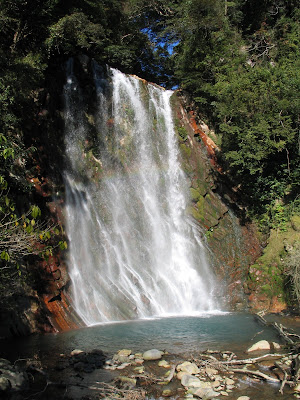 |
| Miyazaki |
This time in Japan I felt that the conversations I had with people went deeper, on both kendo and just life in general. Of course, this is mainly because I've now known them for longer. And maybe also because deep-down they no longer think that I'm just another foreigner who shows up once and then disappear in their lives.
I received many advices from them, ranging from the more general idea of kendo, what goals should be achieved, to the more specific details on how a particular techniques should be executed. The most valuable thing was, believe or not, the kihon trainings I received from Ozawa Sensei, and kihon-related advices from Yamanaka Sensei, Suzuki Sensei and Kaji Sensei.
I think my most significant improvements are wrist power in striking and kirikaeshi. The most urgent thing I have to work on is my footwork - my legs are clumsy. I'm also continuing my suburi (almost) everyday as instructed by Ozawa Sensei.
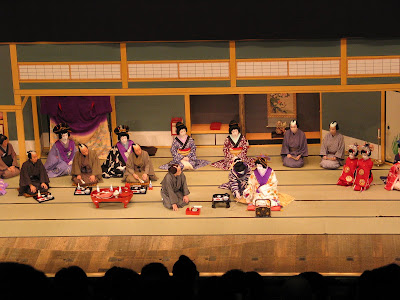 |
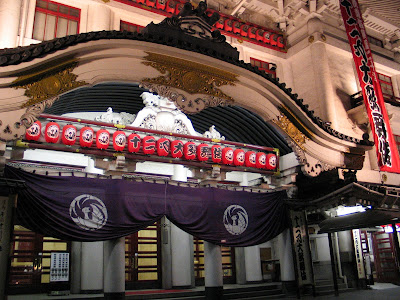
| Traditional Japanese play - Kabuki |
The concept of "tadashii" (正しい) or proper/straight kendo was repeatedly mentioned by many teachers, and it is also apparent from the kendo that these great kendoka are playing. I think that this is a goal that should be aimed for from the start, instead of much later or when one gets old, as believed by some. I have received advices from some amazing kendo teachers who majored in kendo at universities, now teaching as their professions, and past winners of all Japan Kendo championships. They all pointed to me in the same direction, that is tadashii kendo.
The importance of kensen (tip of shinai) and the contact between those of the kendo players was pointed out during a private discussion between Ozawa Sensei and Hara Sensei, after visiting a dojo in Taiwan. The main point of the discussion is that, Kendo is about communication, therefore without the tips of shinais touching, it is a meaningless fight.
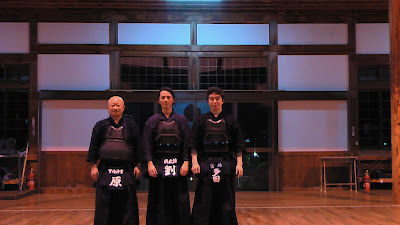 |
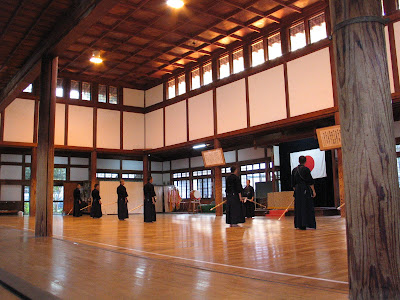
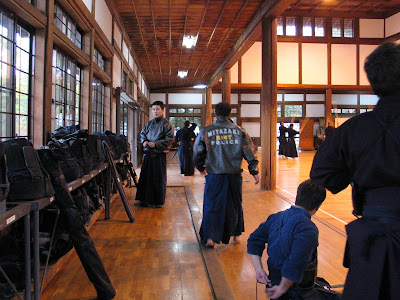
| Miyazaki Police dojo with Hara Sensei and Ryuzo kun |
In summary, this journey consolidated further the goals in kendo I want to achieve, and I am convinced that kendo will always be a part of my life. It has bound me together with my culture and my beliefs; it has given me a life without boarders between countries, and the chance to know many open-minded friends. I feel that the modern-day kendo is no longer an art to kill, but an art to connect between people and cultivate the mind. My wish is that it won't become just a game of winning and losing but maintain the much cultural qualities that makes it so much richer than some of the other martial arts.
 |
| Kuroda san and Kodama san |